Installation process
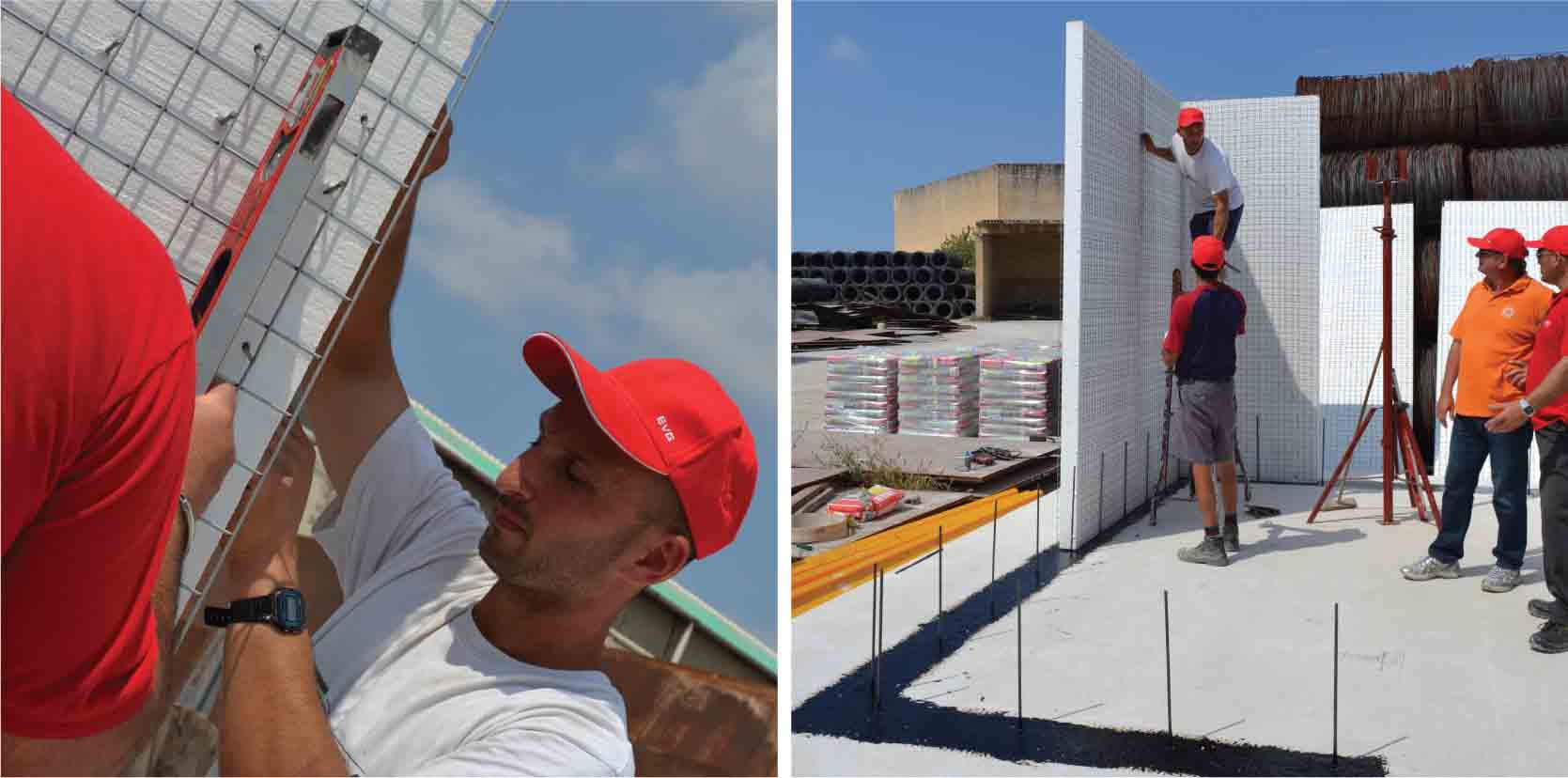
Erection of construction is quick and easy. EVG—3D panels are light and therefore no cranes are required. Moreover, the construction process is simple and easy to understand, and does not require specialised, skilled labour.
Step 1 – Connection to foundation
The EVG-3D construction systems can be built on any foundation, subject to starter bars cast into the foundation according to structural engineering requirements. The panels are usually placed so that the rebar is set between the mesh and the polystyrene. This ensures easy and precise wall alignment. A damp proof layer is applied under the wall panel.

Step 2 - Erection of wall panels
Erection of the EVG-3D panels always starts from the corners, in order to achieve the required construction rigidity. Panels are connected together with a splice mesh, which is fastened on both sides.
Step 3 - Reinforcing - Panel Splices
Panel walls are reinforced by means of splice mesh. This is normally required at corners, between panels and around openings. This will create continuous mesh reinforcement. Reinforcing ties and bars are used at building element junctions to add strength to joints.
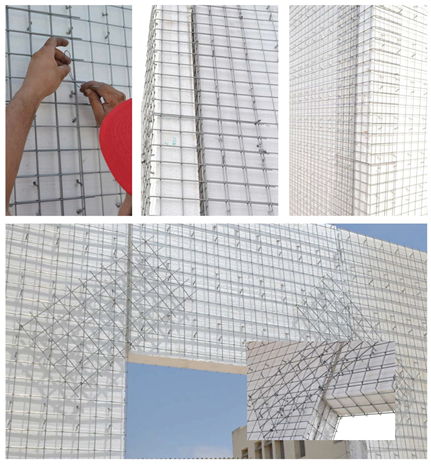
Step 4 - Forming Openings
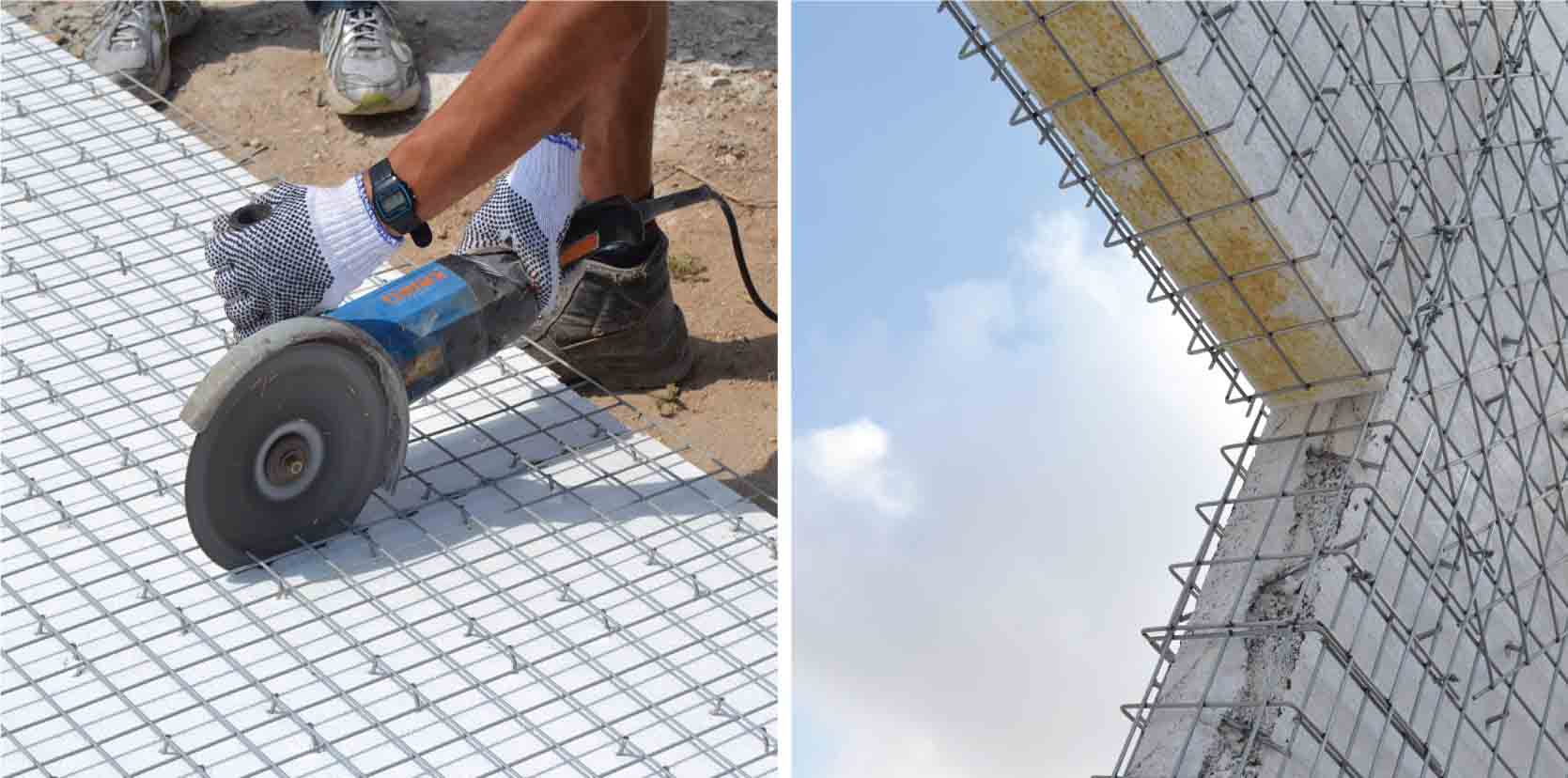
Openings for doors and windows can be easily cut on site to specific sizes as per details. Splice mesh is placed at each corner for consolidation. Extra rebars are to be included for large openings. To reduce wastage, the panels remaining from an opening can be easily used as filler panels in the wall segment.
Step 5 - Shoring & Placing of Slabs
The EVG-3D panel system can be used for any roofs and floor slabs between storeys. Shoring is carried out by using adjustable props with tripods and beams. Slab panels are reinforced with additional rebars at the bottom, U-bars at supports and splice mesh between panels. Slab panels are lifted manually and supported on the wall panels. This system could also be incorporated with traditional construction methods, resulting in a hybrid system.
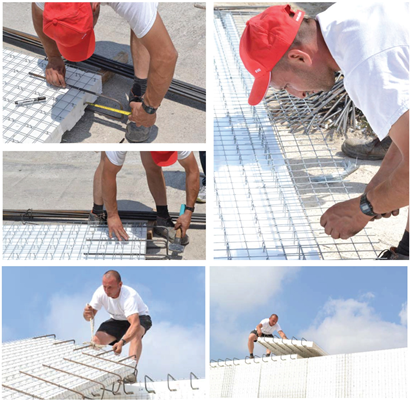

Step 6 - Utilities
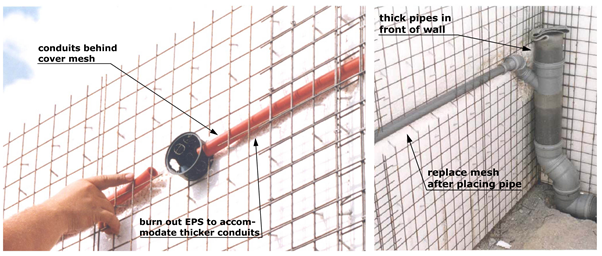
Another great feature of this system is the way it accommodates utilities. Once panels are secured in place, all services are passed between the reinforcing mesh and polystyrene. In order to increase this space, a propane torch or heat gun may be used to melt the polystyrene, which in itself is self-extinguishing.
Step 7 - Shotcreting
Concrete is sprayed onto the walls and underside of slab using a shotcrete pump. Although, the normal procedure is to apply the shotcrete in two layers, the application may also be carried out in a single coat. Screed points of concrete are used as gauges to give correct concrete thickness and lines. Hand trowel finishing of the second layer is required to give the appropriate finish and surface tolerance. However, the surface is not required to be completely smooth as the shotcrete surface will serve as a scratch surface for the finishes of the building.

Step 8 - Finishing
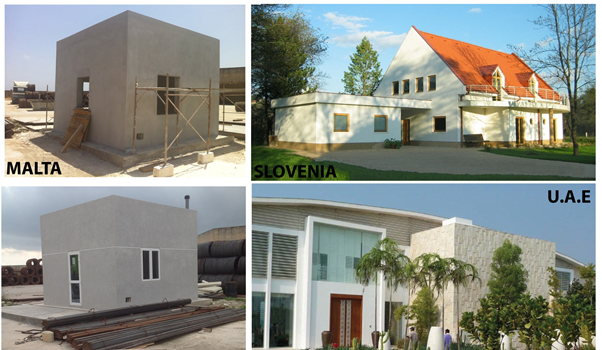
There are various finishes that can be applied, both internally and externally, when using the EVG-3D construction system, depending on the individual preferences of the developer.
JMV’s technical team are fully capable of providing you with the necessary information and advice when it comes to the construction of any structure using the EVG-3D construction system, at all stages of the construction process.
If you would like to know more about our extensive range of products and services available at JMV, contact us today by calling +35621467421, or email us on sales@jmvibro.com. Alternatively, you can even visit JMV Building Solutions on site. We’re located in Triq l-Imdina, Haz-Zebbug.